The Impact of Virtual Reality Puzzles on Spatial Memory and Navigation Skills
The Advent of Cognitive Training through Virtual Reality
In recent years, virtual reality (VR) has surged in popularity, transforming not just entertainment but also cognitive training. Among the myriad of applications, VR puzzles have emerged as a fascinating tool that many are turning to for developing critical cognitive skills. This innovative use of technology is reshaping how we perceive learning and brain development.
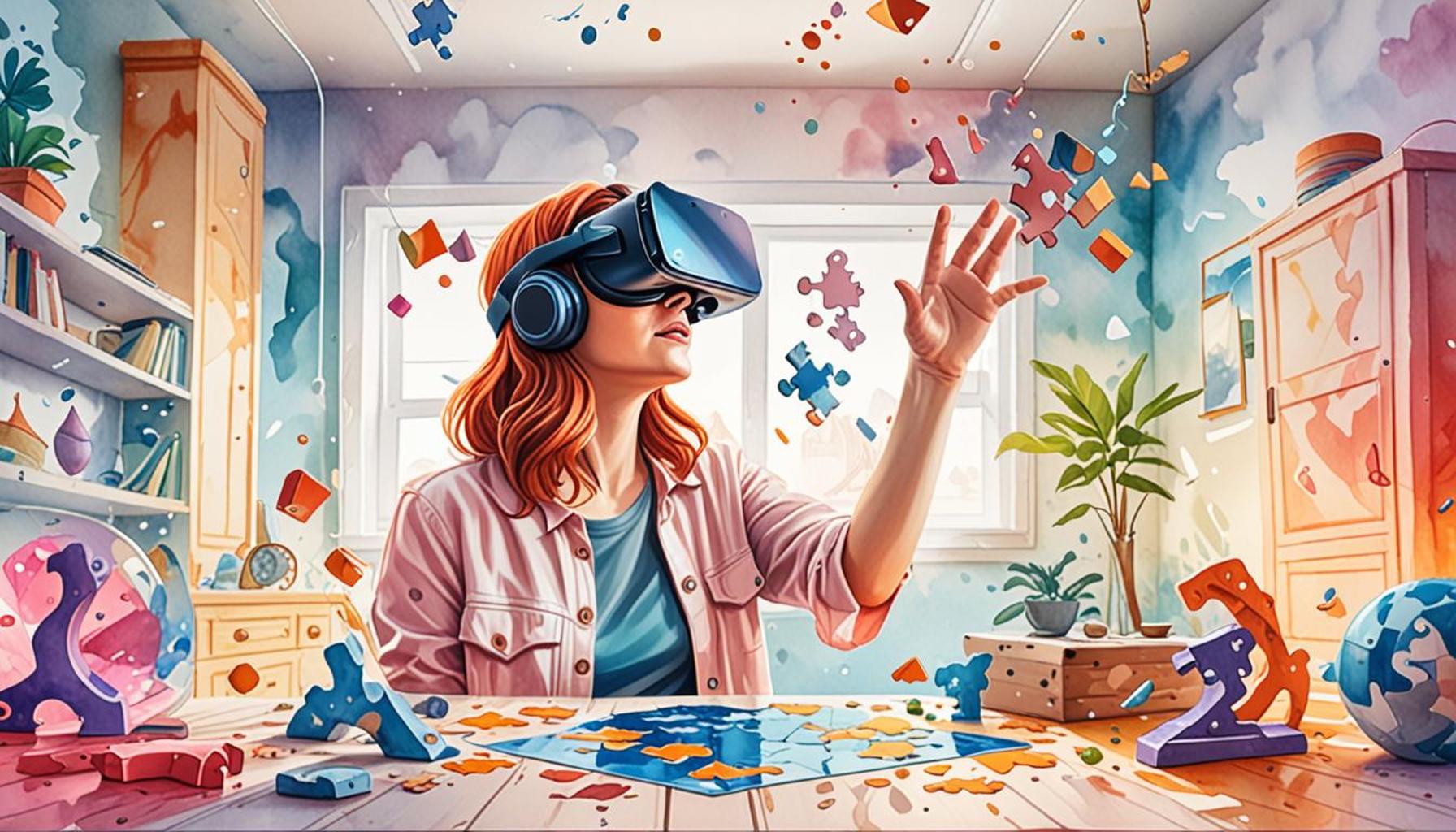
These engaging challenges are more than just games; they serve as comprehensive platforms that promote cognitive enhancement. For instance, VR puzzles allow users to interact with an immersive environment that closely mimics real-world situations, enabling individuals to practice real-time decision-making and critical thinking in a safe context. This method is particularly useful for training professionals such as pilots or surgeons who need to hone their spatial awareness and coordination skills without the risk of real-life consequences.
Additionally, these puzzles encourage interactive problem-solving by presenting users with complex scenarios that require exploration and manipulation of elements within a 3D space. Consider an example where players navigate through a virtual maze filled with various obstacles; they must think creatively and strategically to find solutions. Such experiences can effectively stimulate brain activity and enhance both mental flexibility and analytical thinking.
The dynamic nature of these challenges can also adapt to an individual’s progress, ensuring that users are continuously pushed to their limits in a way that maintains engagement without overwhelming them. Such personalized experiences can be particularly beneficial in educational settings, where students can tackle tailored challenges that align with their specific learning curves.
Research indicates that engaging with VR puzzles can lead to substantial improvements in cognitive abilities. For instance, studies have shown that participants exhibit:
- Enhanced ability to retain environmental layouts, which is crucial for various daily tasks, from navigating unfamiliar cities to remembering key locations in a larger area.
- Improved route planning and direction following, making it easier for individuals to plot efficient paths in both familiar and novel settings.
- Increased spatial awareness and memory recall, essential skills not just for academics, but for everyday interactions and personal safety.
As VR technology continues to evolve, understanding its effects on our cognitive functions becomes vital. With a projected growth in the VR industry, there is substantial potential for these tools to shape our brain’s navigation capabilities significantly. This article delves deeper into the intriguing connections between virtual reality puzzles and spatial cognition, inviting the reader to explore how these advancing technologies can enhance cognitive development and offer real-world benefits.
For those curious about the future of learning, immersing oneself in VR puzzles could very well be the next step towards enhancing cognitive abilities in a fun and engaging manner. The impact of these tools is not limited to personal development but also extends to therapeutic applications, including rehabilitation programs for stroke patients or individuals recovering from brain injuries, showcasing the versatile capabilities of VR in fostering cognitive resilience.
DIVE DEEPER: Click here to discover more
Exploring the Mechanics of Spatial Memory in Virtual Environments
The cognitive benefits of engaging with virtual reality puzzles have piqued the interest of researchers and educators alike. At the heart of this exploration is the concept of spatial memory, defined as the ability to perceive and remember the positions of objects in an environment. This skill is essential not only for mastering navigational tasks but also for enhancing overall cognitive function.
In VR, the user is placed within meticulously crafted three-dimensional environments that aim to simulate real-world spatial configurations. Unlike traditional puzzles, which may rely on static images or two-dimensional layouts, VR environments allow users to engage with their surroundings interactively. This aspect is critical since dynamic interaction has been shown to foster better retention of spatial information. Studies indicate that individuals who interact with a virtual environment tend to have a stronger ability to recall and navigate that environment later, compared to those who observe it passively.
The Role of Navigation Skills and Environmental Interaction
As participants engage in VR puzzles, they must often utilize various navigation strategies to solve challenges. These may include remembering routes, identifying landmarks, and recognizing spatial cues. The development of these navigation skills is facilitated through repeated exposure to the virtual landscape, allowing users to form mental maps of their surroundings.
- Active Exploration: By actively exploring a virtual space, individuals can enhance their mental mapping skills, which is crucial for everyday navigation.
- Landmark Recognition: Participants often rely on prominent features within the VR environment, helping to anchor their spatial memory.
- Cue-Based Navigation: VR puzzles frequently present users with clues that require navigating back and forth, reinforcing memory pathways.
Recent research has shown that this kind of interactive gameplay can lead to notable improvements in spatial navigation tasks. For instance, a study published in the journal *Psychological Science* found that individuals who practiced in virtual environments demonstrated a greater enhancement in spatial memory retention compared to those who relied solely on traditional learning methods.
These findings suggest a rich avenue for further investigation into how VR puzzles can help individuals not only improve their navigational skills but also enhance broader cognitive abilities. With VR technology becoming increasingly accessible, the incorporation of these cognitive training tools could pave the way for innovative approaches in education, rehabilitation, and personal development.
The implications of this research extend beyond mere entertainment; they invite educators and clinicians to recognize VR puzzles as valuable educational tools. This fusion of cutting-edge technology and cognitive psychology can create environments where learning thrives, optimizing users’ spatial memory and empowering them with skills that translate into real-world applications.
| Category | Advantages |
|---|---|
| Enhanced Spatial Awareness | Participants often display improved spatial navigation skills after engaging in immersive VR puzzles. |
| Cognitive Development | Solving VR puzzles requires strategic thinking, resulting in enhanced memory retention and higher cognitive function. |
Virtual Reality (VR) puzzles serve as a unique platform for testing and improving spatial memory and navigation skills. By immersing participants in a multi-dimensional environment, these puzzles challenge users to navigate through complex scenarios, thereby refining their spatial reasoning. Neuroscience research indicates that when individuals engage in VR environments, areas of the brain associated with spatial awareness, such as the hippocampus, become more active. The resultant stimulation can lead to a stark improvement in both memory recall and navigational efficiency.Moreover, VR puzzles not only assist in enhancing spatial awareness but also support cognitive development in children and adults alike. As users tackle intricate challenges, they are required to implement problem-solving strategies that bolster their critical thinking skills. This dual benefit of entertainment and cognitive growth makes VR puzzles an appealing tool for educators and therapists looking for innovative ways to engage their audiences. Engaging with this technology allows for a *hands-on* approach to learning, fostering an environment ripe for exploration and discovery, inviting the reader to delve deeper into how virtual reality is reshaping cognitive learning landscapes.
DIVE DEEPER: Click here to learn more
Enhancing Cognitive Abilities through VR Puzzles
The advantages of virtual reality puzzles extend beyond mere enhancement of spatial memory and navigation skills; they also provide a broad platform for bolstering a variety of cognitive functions. Engaging with these immersive environments stimulates not only memory skills but also critical thinking, problem-solving, and decision-making capabilities. Recent investigations have shown that the cognitive load experienced in VR environments compels users to heighten their focus and hone their mental acuity, leading to significant improvements in overall cognitive performance.
One notable aspect of VR puzzles is their ability to create contexts that promote adaptive learning. For example, consider educational VR platforms that immerse students in historical or scientific environments. As students navigate through these scenarios while solving intricate puzzles, they must employ spatial reasoning and navigation strategies that contribute to deeper learning experiences. Researchers have noted that learners who utilize VR-based learning tools often show greater retention of information, as they can relate abstract concepts to tangible experiences.
In a fascinating twist, recent studies suggest that age-related differences in cognitive abilities may be mitigated through regular engagement with VR puzzles. A study conducted at a leading university found that older adults who participated in VR-based spatial memory tasks showcased improvements similar to those of younger participants. This points to the exciting potential of VR as a rehabilitation tool, particularly for older populations facing cognitive decline, indicating that such innovative approaches could lead to enhanced quality of life.
Real-World Applications and Implications
The real-world implications of VR puzzles extend far beyond entertainment and academic settings. Industries such as healthcare, architecture, and even urban planning stand to benefit substantially from advancements in VR technology. For instance, medical professionals can utilize virtual environments to simulate intricate surgical procedures, enabling them to master spatial navigation skills that are critical during real-life operations. Similarly, architects and urban planners can leverage interactive VR puzzles to visualize and manipulate structures within a three-dimensional context, improving their planning and design processes.
- Healthcare Training: Virtual reality offers immersive training scenarios for medical professionals, allowing them to navigate complex anatomical structures and improve their surgical precision.
- Architectural Design: Architects can visualize spatial layouts and design elements in real-time, facilitating meaningful dialogue with clients and stakeholders.
- Urban Planning: City planners can simulate urban landscapes to optimize navigation pathways and enhance the overall functionality of city spaces.
Moreover, ongoing research emphasizes the potential for therapeutic interventions using VR puzzles in treating conditions such as PTSD and anxiety. The efficacy of immersing individuals in carefully created environments is proving to be an invaluable aid in therapeutic settings. By encouraging active engagement with spatial tasks, patients can develop coping strategies that improve their navigation skills, ultimately enhancing their day-to-day functioning.
As technology continues to evolve, the intersection of virtual reality and cognitive enhancement offers a promising frontier worth exploring. VR puzzles, with their unique capacity to enhance spatial memory and navigation skills, represent a bold step into the future of cognitive training and rehabilitation. Drawing attention to these advancements holds the key to unlocking new possibilities for education, therapy, and professional training, reiterating the profound impact of virtual reality in shaping cognitive pathways.
DISCOVER MORE: Click here to uncover the mental health benefits of puzzles
Conclusion: Unlocking the Future with Virtual Reality Puzzles
The exploration of virtual reality puzzles has opened a new frontier in understanding and enhancing spatial memory and navigation skills. By immersing users in engaging and interactive environments, these puzzles not only entertain but also serve as potent tools for cognitive development. The findings highlight the multifaceted benefits of VR puzzles, revealing enhancements in critical thinking, adaptive learning, and even therapeutic applications for various demographics.
As we have seen, the capacity of VR to offer a hands-on learning and cognitive training experience is invaluable. It transcends traditional educational methods, encouraging greater retention of information and offering real-life skill applications in fields such as healthcare, architecture, and urban planning. Furthermore, the ability to mitigate age-related cognitive decline through regular engagement with VR puzzles signals a significant breakthrough for rehabilitation methods, potentially transforming the quality of life for older adults.
Looking ahead, the implications of these findings suggest that virtual reality is not merely a passing trend but a transformative force in cognitive science and therapeutic practices. The potential for VR puzzles to bridge gaps in education, professional skillsets, and mental health interventions is vast. As researchers and developers continue to innovate in this space, it becomes increasingly crucial for educators, clinicians, and industry professionals to harness this technology effectively. Embracing the impact of virtual reality puzzles invites us to rethink traditional approaches to cognition and opens doors to uncharted realms of cognitive enhancement.