
The Impact of Sudoku on Cognitive Skill Enhancement
The Transformative Power of Sudoku
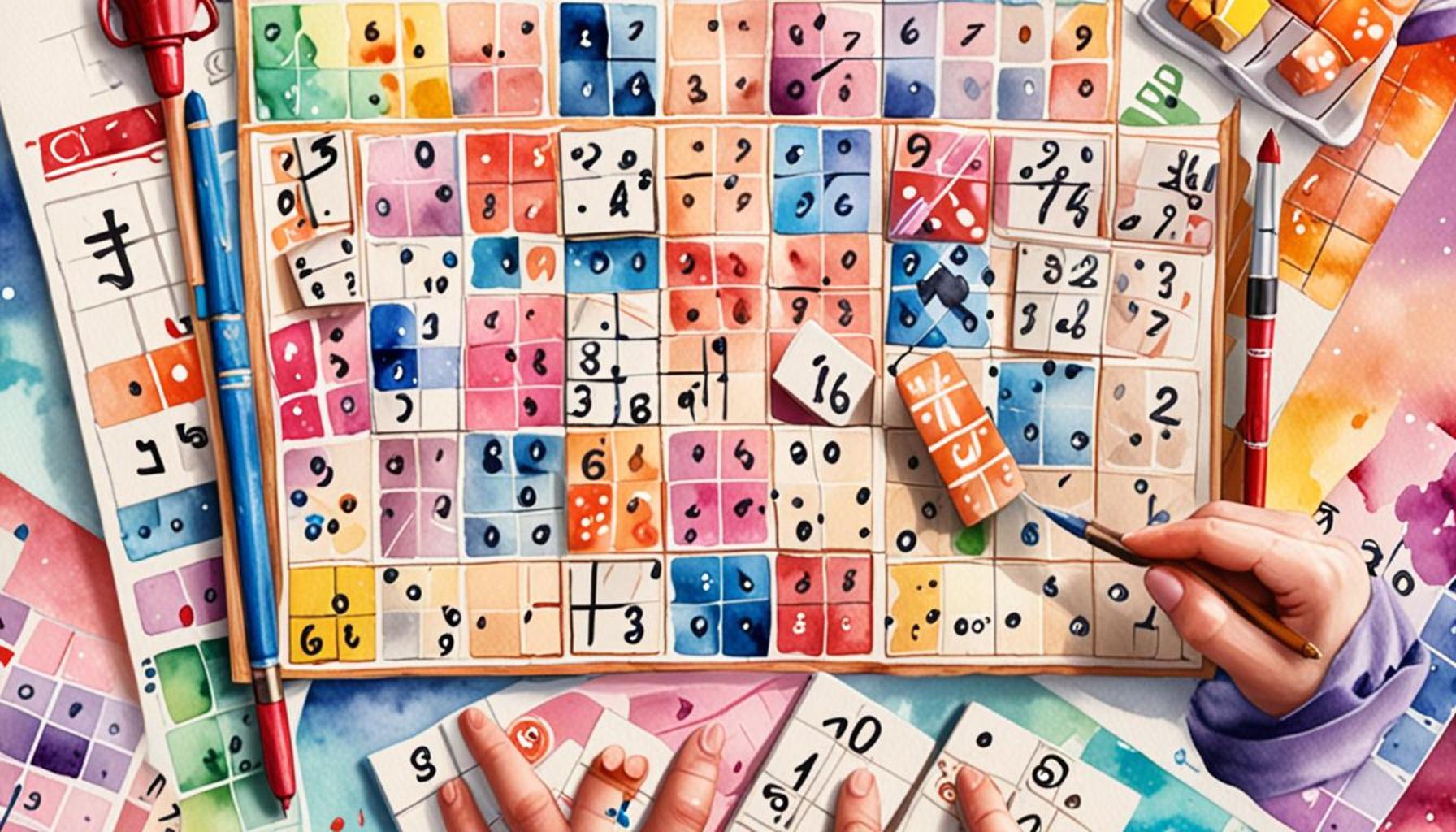
Originally developed in the late 19th century, Sudoku has rapidly evolved into a global phenomenon, particularly capturing the attention of puzzle enthusiasts in the United States. While many indulge in Sudoku purely for enjoyment, its true value lies in its capacity for cognitive skill enhancement. Engaging with this intricate number-placement puzzle yields numerous mental benefits, making it appealing to both the young and the old alike.
Studies have demonstrated that regular participation in Sudoku can significantly bolster various cognitive abilities. By engaging with this puzzle, players can experience advancements in:
- Problem-solving skills: Solving a Sudoku puzzle requires players to think critically and develop logical sequences, enhancing their ability to tackle everyday challenges and complex problems.
- Memory: The act of remembering which numbers have been used or must fit into a particular cell boosts short-term memory. This practice sharpens the brain’s capacity for number retention and retrieval.
- Concentration: Sudoku demands unwavering focus, training players to hone their attention to detail and ignore distractions, a skill beneficial in various aspects of life.
Furthermore, Sudoku encourages strategic thinking. Players can’t merely rely on basic arithmetic; they must plan several steps ahead, adapt their strategies as they face challenges, and sometimes backtrack to find solutions. This cognitive exercise mirrors real-life decision-making scenarios, allowing individuals to practice analytical reasoning in a safe, engaging environment.
To illustrate, consider how a business professional might apply their sharpened problem-solving skills from Sudoku to intricate project management tasks. As they navigate through challenging deadlines and complex logistics, the logical frameworks developed through puzzle-solving can bring clarity and enhanced efficiency to their work.
As we delve deeper into the intriguing world of Sudoku, it becomes evident that these cognitive enhancements contribute to greater overall mental agility and resilience. Could mastering Sudoku indeed be the key to a sharper, more efficient mind? The implications of this simple puzzle extend far beyond its grid, as ongoing research and anecdotal evidence continue to unveil the transformative effects of engaging with numbers.
In conclusion, whether you are a seasoned puzzle-solver or a curious beginner, immersing yourself in Sudoku not only promises hours of fun but also holds the potential to significantly boost your cognitive functions. Why not embark on a journey into the world of Sudoku today and unlock your mind’s true potential?
LEARN MORE: Click here to dive deeper
The Cognitive Benefits of Engaging with Sudoku
Sudoku is more than just a pastime; it’s a powerful tool for enhancing cognitive skills. Engaging regularly with Sudoku puzzles can lead to remarkable improvements in various areas of mental function. The structured nature of the game requires players to apply logical reasoning, a practice that reinforces and develops critical thinking abilities.
Many enthusiasts may not realize that Sudoku enhances problem-solving skills through its unique blend of challenge and strategy. When players face a complex grid, they are forced to assess multiple possibilities, ruling out options based on existing numbers. This skill translates seamlessly into real-world situations such as project planning and troubleshooting, where discerning a logical path can lead to effective resolutions.
Moreover, the effect of Sudoku on memory cannot be overstated. Each puzzle demands that players track various numbers and their placements, effectively exercising short-term memory. As they navigate through different levels of difficulty, users train their brains to retain patterns and sequences. Research supports the notion that such repeated mental tasks can lead to improved cognitive performance in daily activities, from remembering grocery lists to mastering new skills in the workplace.
Additionally, the need for concentration is paramount in mastering Sudoku. Players must maintain intense focus to avoid errors, showcasing a direct correlation between puzzle-solving and enhanced attention spans. This sharpened concentration skill can help individuals excel in environments characterized by distractions, such as busy workplaces or noisy households. The ability to zone in on tasks and filter out noise is an invaluable asset in today’s fast-paced world.
- Improved Problem-Solving Abilities: Analyzing and strategizing solutions in Sudoku fosters the capacity to solve problems efficiently in real life.
- Enhanced Memory Retention: Remembering number placements sharpens short-term memory, benefiting everyday cognitive tasks.
- Heightened Concentration Levels: Increased focus helps improve productivity in work and daily activities.
As the brain engages with Sudoku, players also nurture their strategic thinking capabilities. Just as a chess player anticipates their opponent’s next move, Sudoku enthusiasts must think several steps ahead. Every decision impacts subsequent moves, necessitating adaptability and foresight. This mental flexibility emerges as a crucial skill, especially in high-pressure environments. For example, a teacher might refine their ability to adapt lesson plans based on students’ responses, utilizing skills honed through Sudoku puzzles.
The link between participating in Sudoku and a sharpened mind is further reinforced by ongoing studies. Researchers are increasingly interested in exploring how consistent engagement in such cognitive activities contributes to long-term mental health and resilience, particularly in aging populations. This interest hints at the wider implications of Sudoku as a valuable cognitive exercise, one that transcends mere entertainment.
In summary, the engrossing experience of tackling Sudoku puzzles not only promises mental stimulation but also serves as a gateway to improving essential cognitive skills. From heightened memory and concentration to refined problem-solving abilities, the benefits are extensive and well worth the investment of time. Consider incorporating Sudoku into your daily routine to start reaping these advantages today.
| Cognitive Skills | Benefits |
|---|---|
| Memory Improvement | Engaging with Sudoku enhances short-term memory, as players must recall numbers and placements. |
| Problem-Solving Skills | Sudoku challenges players to develop strategies, fostering critical thinking and logic. |
| Concentration | The focus required to solve puzzles translates to improved attention span in everyday tasks. |
| Visual-Spatial Reasoning | Tracking potential placements hones abilities to visualize patterns and spatial orientation. |
| Stress Relief | Engaging in Sudoku can provide a mental escape, reducing anxiety levels and boosting mood. |
Sudoku is not just a pastime; it has multifaceted impacts on enhancing cognitive skills. For instance, the game significantly boosts memory as players are required to remember various placements and patterns of numbers. This mental exercise not only benefits in-game performance but also translates into real-world applications, improving memory retention in daily activities.Moreover, Sudoku promotes problem-solving skills. As individuals navigate through challenging puzzles, they cultivate a methodical approach to finding solutions—a skill that is invaluable across various domains, from academics to career challenges. This reinforcement of critical thinking is vital for anyone looking to enhance their mental agility. Furthermore, the focus demanded by Sudoku puzzles significantly enhances concentration, making it easier for players to handle complex tasks with greater attention. It also fosters visual-spatial reasoning as players visualize possible placements, an ability essential in fields such as architecture and engineering.Lastly, these engaging puzzles also serve as a form of stress relief, providing a constructive and enjoyable way to disengage from daily pressures and anxieties, ultimately leading to improved overall well-being. Through the consistent practice of Sudoku, individuals can unlock potential cognitive benefits that extend far beyond the puzzle itself.
DISCOVER MORE: Click here to enhance your cognitive skills
Sudoku and Neuroplasticity: The Science Behind Cognitive Skill Development
Engaging with Sudoku puzzles does more than merely challenge the mind; it also plays a significant role in fostering neuroplasticity, which is the brain’s ability to reorganize itself by forming new neural connections. This adaptability is crucial for cognitive skill enhancement, particularly as individuals age. Research has shown that stimulating activities like Sudoku can encourage growth in brain regions associated with logical reasoning and critical thinking.
Studies examining neuroplasticity have indicated that mentally stimulating exercises, including Sudoku, can lead to improved cognitive functions and may even help stave off age-related decline in mental acuity. This underscores the importance of lifelong learning and engagement in cognitively demanding activities. A fascinating study published in the journal “Neuropsychology” revealed that older adults who regularly completed Sudoku puzzles exhibited better problem-solving skills and displayed increased activity in the frontal lobes of the brain, areas crucial for higher-level thinking and decision-making.
In addition to enhancing logical reasoning, Sudoku encourages the development of pattern recognition skills. Players learn to identify patterns and relationships between numbers, a skill that holds practical significance in fields ranging from mathematics to computer programming. For example, software developers frequently use algorithmic thinking that involves recognizing and manipulating patterns, akin to the strategies used in Sudoku. This ability to see connections and abstract concepts can lead to greater efficiency in various professional scenarios.
Furthermore, the concept of visual-spatial reasoning is integral to Sudoku play. As participants work to fill a 9×9 grid, they must visualize how numbers interact within the larger puzzle framework. This skill is not only crucial in puzzle solving but also translates to success in disciplines like architecture, engineering, and graphic design. Professionals in these fields often rely on strong visual-spatial skills to conceptualize and execute their projects effectively.
While the cognitive enhancements linked to Sudoku are substantial, the game also provides a valuable social aspect that is often overlooked. In the United States, numerous communities host Sudoku tournaments and clubs where enthusiasts gather to solve puzzles collaboratively. This social interaction further enriches the cognitive experience, as players discuss strategies and challenge one another, fostering deeper understanding and engagement with the game. The collaborative nature of these activities can lead to improved communication and social skills, which are essential components of cognitive health.
- Neuroplasticity: Regular engagement with Sudoku can enhance the brain’s capacity to form new neural connections, particularly in older adults.
- Pattern Recognition: Developing the ability to see connections in dynamics is valuable in many professional fields, such as programming and mathematics.
- Visual-Spatial Reasoning: The game enhances skills related to visualizing and solving spatial challenges, beneficial for careers in design and engineering.
- Social Interaction: Participating in Sudoku clubs fosters community engagement, improves communication skills, and enhances the collective cognitive experience.
The intersection of cognitive enhancement and social engagement evident in Sudoku illustrates its multi-faceted benefits. By harnessing its power as a cognitive exercise, individuals of all ages can unlock their mental potential, all while enjoying the challenge and satisfaction that comes with successfully completing a puzzle. With a myriad of cognitive advantages on offer, it is no surprise that Sudoku has gained a dedicated following among enthusiasts eager to sharpen their minds.
DISCOVER MORE: Click here to learn how mind games can enhance your problem-solving skills
Conclusion: Unlocking Mental Potential Through Sudoku
In summary, the intricate game of Sudoku serves as a powerful tool for fostering cognitive skill enhancement across diverse demographics. The benefits of engaging with Sudoku extend beyond mere entertainment; they encompass profound impacts on neuroplasticity, pattern recognition, and visual-spatial reasoning. As players embark on the journey of solving these puzzles, they activate and strengthen various cognitive pathways, promoting not only mental agility but also resilience against age-related cognitive decline.
The demonstrable effects of Sudoku on cognitive function illustrate its potential as an integral part of a lifelong learning journey. Regular participation in Sudoku can yield significant improvements in problem-solving abilities and help individuals navigate complex challenges in both personal and professional arenas. Furthermore, the social interactions fostered through community clubs and tournaments enhance communication skills, creating networks of support and camaraderie among puzzle enthusiasts.
As we continue to seek methods for enhancing cognitive health and mental acuity, Sudoku stands out as both an accessible and enjoyable option. Its increasing popularity in the United States speaks to its broad appeal, and insights from emerging research advocate for its role in maintaining a sharp and active mind. For individuals eager to tap into their cognitive potential, engaging with Sudoku may be the key to unlocking a new realm of mental fitness. Consider incorporating this stimulating puzzle into your daily routine, and discover the cognitive enhancement that awaits!