How Jigsaw Puzzles Enhance Spatial Reasoning and Visual Perception
The Benefits of Jigsaw Puzzles
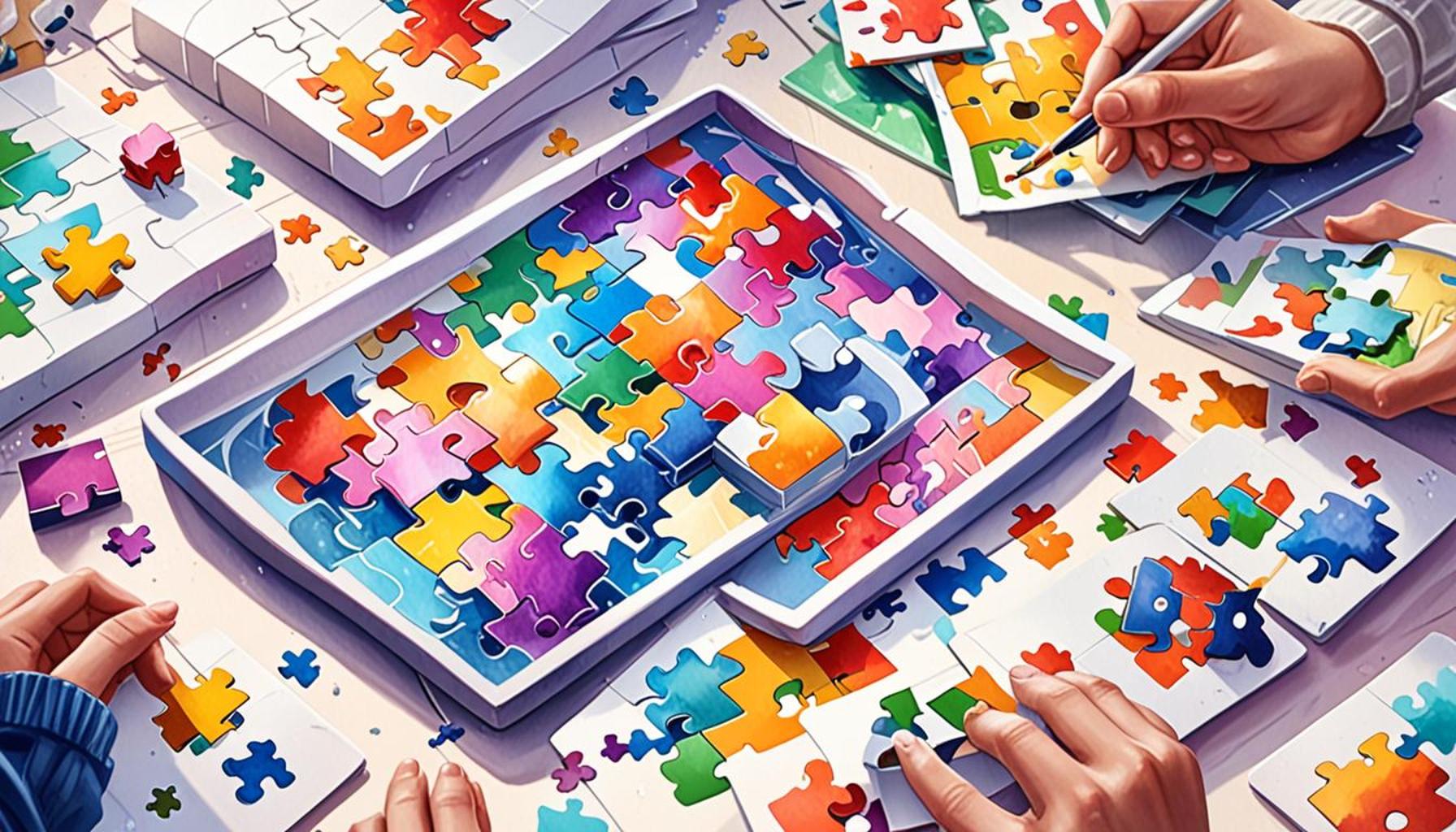
Engaging in jigsaw puzzles provides a unique blend of relaxation and mental exercise, making it an increasingly popular pastime among individuals of all ages. Beyond the surface-level enjoyment that comes from assembling beautiful images piece by piece, puzzles serve as tools for cognitive development. The mental effort required to fit pieces together promotes not only leisure but also essential cognitive skills such as spatial reasoning and visual perception.
One primary benefit of jigsaw puzzles is the enhancement of problem-solving skills. Each piece acts as a challenge, requiring enthusiasts to think critically about how different shapes will interlock. For example, a puzzle depicting a vibrant landscape may feature various shades of green and blue. Identifying which pieces belong to the sky and which ones belong to the foliage requires concentration and analytical thinking. As puzzle solvers endeavor to find the right fit, they engage in a process of hypothesis and testing, core components in effective problem-solving.
The process of solving puzzles also develops visual discrimination skills. As participants look for specific colors, patterns, and shapes, their observational skills improve dramatically. Research has shown that activities that challenge visual processing can lead to heightened attention in other areas of life; for instance, individuals who practice visual discrimination through puzzles often excel in tasks requiring quick, accurate visual assessments, such as driving or sports.
Another significant cognitive benefit linked to puzzle-solving is memory improvement. Remembering the shapes and colors of pieces, along with their previous placements, engages short-term memory. This mental exercise can enhance both recall and recognition, resulting in better overall memory function. For example, assembling a detailed puzzle can lead solvers to recall past experiences related to specific images, like a serene beach or a vibrant cityscape, further deepening their engagement with the task.
Furthermore, as the brain engages in visual-motor coordination during puzzle assembly, it refines the ability to recognize spatial relationships. This skill is crucial in daily activities—from intuitively parking a car to determining the best layout for a room. Importantly, studies indicate that these cognitive enhancements are not limited to any one age group. Children can benefit from improved academic performance, while older adults may find that puzzles help stave off cognitive decline.

In today’s fast-paced and distraction-heavy digital environment, traditional jigsaw puzzles offer a refreshing escape that encourages focused clarity. In fact, the simplicity of piecing together images can provide a meditative experience, allowing individuals to unwind while boosting their mental acuity. This is why many parents and educators encourage puzzle-solving as a means to develop critical thinking in children.
With multiple dimensions to the cognitive benefits that jigsaw puzzles offer, it is evident that they serve as more than just a source of entertainment. They invite anyone, regardless of age or background, to immerse themselves in a journey of discovery and skill enhancement. For those curious about enhancing their cognitive abilities, picking up a jigsaw puzzle might be the perfect first step.
DON’T MISS: Click here to discover the benefits of logic games
Unlocking the Mind: The Mechanics of Spatial Reasoning
At the heart of solving jigsaw puzzles lies the intricate process of spatial reasoning. This cognitive ability enables individuals to comprehend how different objects relate to each other within a three-dimensional space. When piecing together a puzzle, one engages in several activities that stimulate spatial reasoning, such as visualizing how pieces might fit together even before trying to connect them. This involves the use of mental rotation, an essential skill for effective problem-solving that is used not just in puzzles, but in various real-life situations, from architectural design to engineering.
The act of manipulating puzzle pieces enhances the brain’s ability to visualize transformations and rotations of objects, which is especially critical in scientific and technical fields. For instance, an engineer’s work often requires the capacity to mentally rotate and visualize components within a mechanical system. This is closely tied to the enhanced spatial skills developed through regular engagement with jigsaw puzzles, indicating that such leisure activities can have far-reaching implications.
The Role of Visual Perception in Puzzle Solving
In addition to boosting spatial reasoning, jigsaw puzzles are powerful tools for enhancing visual perception. This skill involves the ability to interpret and make sense of visual information, and it can significantly affect one’s daily life. Through the process of matching colors, patterns, and shapes, individuals develop a keener ability to distinguish subtle differences that may otherwise go unnoticed. The high level of concentration demanded while sorting out pieces not only sharpens attention but also aids in the overall enhancement of one’s observational skills.
Several studies have highlighted noteworthy connections between visual perception skills honed through jigsaw puzzles and improved performance in activities that require quick visual judgments. Consider these key benefits:
- Greater Attention to Detail: Regular exposure to intricate puzzles can foster an enhanced focus on minute variations, which can translate into better performance in both academic and professional settings.
- Improved Pattern Recognition: Engaging with puzzles encourages individuals to identify patterns, a skill that is invaluable in fields such as mathematics, music, and even literature.
- Better Visual-Motor Coordination: As players manipulate pieces, they refine the synergy between visual input and physical movement, essential in everything from athletic performance to everyday tasks like driving.
The remarkable interplay between spatial reasoning and visual perception indicates that the cognitive benefits of jigsaw puzzles extend far beyond mere entertainment. Those who regularly engage with these puzzles find themselves developing a toolkit of skills that enhances their ability to navigate the world with competence and efficiency. Furthermore, as schools and educational programs increasingly emphasize the importance of critical thinking and problem-solving, jigsaw puzzles emerge as a compelling avenue for nurturing these essential abilities.
How Jigsaw Puzzles Enhance Spatial Reasoning and Visual Perception
Jigsaw puzzles are more than just a delightful pastime; they serve as excellent tools for cognitive development, particularly in enhancing spatial reasoning and visual perception. When engaging with jigsaw puzzles, individuals practice critical thinking as they manipulate pieces to fit together, often requiring a focus on the overall picture while simultaneously honing fine motor skills. This dual-tasking promotes a deeper understanding of spatial relationships and object manipulation, essential skills not only in gameplay but also in everyday life tasks.Furthermore, various studies have illustrated how regular engagement in puzzle-solving can lead to improved problem-solving abilities. As individuals work to complete a puzzle, they are not only learning to recognize shapes and colors but also developing their ability to visualize and rotate objects in their mind—a fundamental aspect of spatial reasoning. Incorporating jigsaw puzzles into educational settings can be especially beneficial for young children, providing them with a fun yet challenging way to boost their cognitive abilities. Older adults can also experience significant benefits, including cognitive rehabilitation for memory and attention. The mind’s continuous engagement in solving puzzles helps maintain and even improve cognitive functions, contributing to overall mental health.As the puzzle pieces come together, so too does an improved sense of spatial awareness, laying the foundation for better navigation skills and enhanced perception of the world around us.
| Advantage | Description |
|---|---|
| Enhanced Spatial Reasoning | Puzzles require identifying shapes and spatial relationships, improving intuitive understanding of distances. |
| Increased Visual Perception | As players analyze colors and patterns, they cultivate sharper observational skills, aiding in quick recognition of objects. |
The intricacies of how puzzles function extending beyond mere amusement are profound, indicating that indulging in jigsaw puzzles might indeed reshape how we perceive and interact with our environment. Thus, the next time you engage in piecing together a picturesque landscape, remember that you are not just passing time; you are actively enhancing vital cognitive skills.
DIVE DEEPER: Click here to discover the benefits of memory games
Fostering Cognitive Development Through Engagement
The benefits of jigsaw puzzles reach far beyond enhancing spatial reasoning and visual perception; they also unify both cognitive and emotional development. Engaging with puzzles encourages perseverance, problem-solving strategies, and a sense of accomplishment. These intricate challenges require a substantial amount of mental flexibility, as individuals must approach each puzzle piece not just as part of a whole, but as a unique component that contributes to a larger concept.
Emotional Resilience and Problem Solving
Completing a jigsaw puzzle often demands patience and resilience, as there will be times when a piece doesn’t seem to fit, or a section of the puzzle remains incomplete. This iterative process encourages individuals to approach problems from different angles, cultivating a mindset focused on solutions rather than difficulties. Research links the development of such cognitive resilience, gained through puzzle solving, to better academic performance, especially in subjects that rely on critical thinking and analytical skills.
Moreover, children who frequently engage with puzzles show marked improvements in their emotional intelligence. By learning to manage frustration when progress stalls or when they hit a mental block, children not only enhance their problem-solving capabilities but also develop essential life skills such as patience and emotional control. As a result, jigsaw puzzles serve as a platform for social learning, granting players, whether they are parents and children or friends collaborating on a puzzle, an opportunity to deepen their interpersonal bonds.
Integration with Technology
In an era dominated by digital engagement, jigsaw puzzles have also adapted to new technologies. Online platforms and mobile applications now offer virtual puzzle experiences that still retain the fundamental cognitive challenges of traditional puzzles. These digital arenas maintain the benefits of enhancing spatial reasoning and visual perception while appealing to tech-savvy individuals. For instance, digital puzzles often incorporate varying levels of complexity, allowing users to develop their skills progressively. Studies indicate that digital puzzle-solving can effectively mirror the cognitive enhancements experienced from physical puzzles, making them accessible to a broader audience.
Furthermore, these digital formats can track users’ progress and improvement in these skills, making it easier for both casual players and educators to gauge cognitive growth over time. In this context, jigsaw puzzles evolve to meet modern expectations while preserving their role as powerful cognitive tools. The incorporation of technology does not diminish the authentic experience of puzzle solving but instead broadens its application and relevance to contemporary learners.
Real-World Applications of Enhanced Skills
The skills nurtured through jigsaw puzzle engagement resonate across various professional landscapes. For instance, architects and urban planners utilize the enhanced spatial awareness developed through puzzle-solving to visualize complete structures and landscapes, often in complex environments where spatial relationships are crucial. Similarly, operators in the ever-evolving technology fields benefit from improved pattern recognition and visual-motor coordination, skills honed through puzzle practice.
Entertainment aside, the impact of regularly engaging with jigsaw puzzles illustrates a compelling case for their inclusion in educational settings for developing skills essential in the modern workforce. Not only do they prepare individuals for the inherent challenges of their chosen fields, but they also cultivate a lifelong love for learning and exploration.
DISCOVER MORE: Click here to enhance your mental well-being
Conclusion: Unlocking Cognitive Potential Through Puzzles
In summary, jigsaw puzzles offer a unique and multifaceted approach to enhancing spatial reasoning and visual perception, serving as both a recreational activity and a powerful cognitive development tool. The intricate process of assembling a puzzle fosters not only critical thinking and problem-solving abilities but also emotional resilience and patience. As individuals learn to manage frustration and approach challenges with innovative solutions, they cultivate essential skills that resonate across academic and professional realms.
The integration of technology into puzzle-solving further broadens its appeal and accessibility, allowing diverse audiences to enjoy the cognitive benefits without constraints. Digital platforms empower players to track their progress and adapt to varying levels of complexity, ensuring that the advantages of spatial awareness and visual processing continue to evolve with the times.
Ultimately, the real-world applications of skills gained through jigsaw puzzles—ranging from architecture to technology—underscore the significance of these activities in preparing individuals for success. As we embrace the intersection of leisure and learning, incorporating jigsaw puzzles into educational environments appears to be a promising strategy for cultivating a generation equipped with vital skills for the future. By engaging with these puzzles, individuals not only unlock pathways to improved cognitive abilities but also foster a lifelong passion for exploration and discovery. Thus, the humble jigsaw puzzle stands as a compelling testament to the power of playful learning.