
Unveiling the Relationship Between Video Games and Mental Agility in Problem Solving
The Cognitive Benefits of Video Gaming
Video games have woven themselves deeply into the fabric of modern culture, creating a vibrant community of both casual and hardcore gamers. More than just a pastime, these digital experiences are being examined for their potential benefits in sharpening mental agility and enhancing problem-solving capabilities. The concept of leveraging video games for cognitive improvement is gaining traction, with an increasing number of studies backing this notion.
One of the most fascinating aspects of video games is their ability to engross players in immersive environments filled with complex challenges. Each gaming experience is uniquely designed to evoke different cognitive skills. For instance, consider the demands placed on a player during a competitive first-person shooter game. As they navigate the game’s world, they must employ:
- Critical Thinking: The necessity for strategic planning and rapid decision-making is paramount, especially in scenarios where choices must be made within seconds. Players often assess their environment, weigh their options, and predict opponents’ moves, which enhances their critical thinking skills.
- Adaptability: Video games frequently present unexpected challenges that require players to adjust their strategies on the fly. This cultivates a mindset that values creativity in problem-solving and flexibility in approach.
- Team Collaboration: In multiplayer settings, players must communicate effectively and coordinate their actions to achieve common goals. This dynamic fosters teamwork and enhances social problem-solving abilities, which are crucial in both personal and professional realms.
As research expands, experts are examining the specific cognitive functions that gameplay might enhance. For example, studies have indicated that video gaming can improve:
- Memory Retention: The requirement to remember intricate game mechanics and long-term strategies strengthens the neurological pathways associated with memory, making recall more efficient over time.
- Spatial Awareness: Engaging with 3D environments and navigating complex maps can significantly bolster a player’s spatial reasoning skills, which translate to improved real-world navigation and organization.
- Logical Reasoning: Puzzle-based games, like “Portal” or “The Witness,” are designed to challenge notions of logic and encourage players to solve intricate problems using deductive reasoning, sharpening their logical thought processes.
This burgeoning field of study prompts important questions about the balance between gaming and its effects on real-life problem-solving skills. Are video games merely a recreational escape, or do they hold the potential to unlock enhanced cognitive functions? As researchers continue to peel back the layers of this complex relationship, the answers may not only reshape our understanding of gaming but also redefine our perception of intelligence and learning in today’s digital age.
DIVE DEEPER: Click here to uncover the science of puzzle-solving
The Mechanisms Behind Enhanced Cognitive Skills
Understanding the relationship between video games and mental agility begins with exploring the mechanisms at play during gameplay. Each game serves as a complex system that requires various cognitive functions, engaging players on multiple levels and challenging them to think critically, adapt quickly, and solve problems creatively. The interactive nature of video games creates a dynamic learning environment that stimulates cognitive growth.
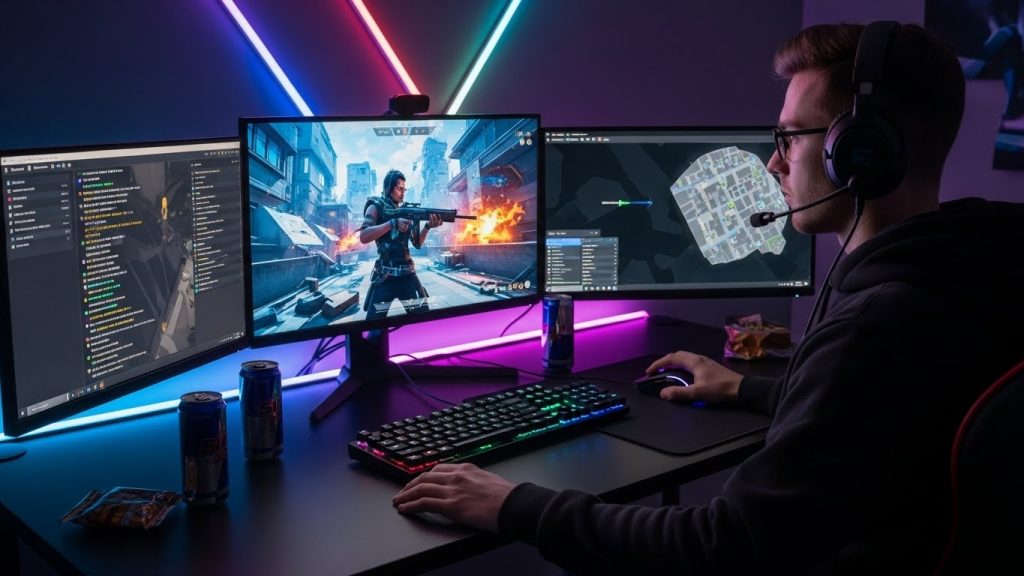
Take, for example, a player immersed in a fast-paced first-person shooter game like “Call of Duty.” Here, the player is not just shooting enemies; they are engaging in a multifaceted cognitive challenge that demands sharp reflexes, quick decision-making, and spatial awareness. Such games require players to analyze their surroundings, predict enemy movements, and adjust their strategies in real time, promoting rapid cognitive flexibility.
Research led by cognitive psychologists suggests that video games can significantly boost cognitive flexibility, the mental capacity to switch between thinking about different concepts or to simultaneously consider multiple concepts. This capability is vital in real-world situations where rapid adaptation is necessary, such as in work environments or during daily decision-making processes.
Furthermore, video gaming enhances several key cognitive domains that are essential for effective problem-solving:
- Attention to Detail: Many video games require players to recognize subtle changes in their environment, a task that sharpens their attention to detail. For example, in stealth games like “Assassin’s Creed,” players must carefully observe non-player character movements and possible interactable elements to navigate levels successfully. These skills can translate into real-life situations, where noticing minor changes can affect outcomes significantly.
- Analytical Skills: Players are often tasked with analyzing different scenarios and responses before taking action. Games that simulate real-world challenges, such as city-building simulations like “SimCity,” push players to assess resources, manage efficiency, and plan urban development, thus honing their analytical thinking. This analytical prowess can be beneficial in careers such as management or urban planning, where strategic decisions are paramount.
- Resource Management: Strategy games like “Starcraft” require players to allocate limited resources effectively, simulating real-life situations where budgeting of time and materials is crucial. This not only develops foresight and planning abilities, but also reinforces the importance of prioritizing tasks, an essential skill in any job that requires juggling multiple responsibilities.
Moreover, video games cultivate a profound ability to assess risks and rewards. The decision-making process within gameplay often necessitates weighing potential outcomes before committing to a course of action. The risk-reward dynamic seen in adventure games like “The Legend of Zelda” accents this learning experience, where players constantly decide whether to pursue a challenge for potential rewards or to avoid risks that could lead to failure. This simulation of real-world risk assessment can greatly enhance one’s capability to make informed decisions in various life scenarios.
Summarizing these cognitive enhancements, it becomes evident that the capacity for problem-solving is deeply intertwined with the mechanics of video gaming. As scholars and educators probe deeper into this relationship, the initial evidence suggests that leveraging this popular medium could be pivotal in developing sharper, more adaptable minds—which are ready to tackle future challenges both in and out of the gaming world.
The link between gaming and cognitive development invites further exploration, prompting educators to consider integrating video game methodologies into learning environments. As we increase our understanding of these dynamic interactions, the potential implications for educational strategies and cognitive training become increasingly significant.
Understanding the Cognitive Benefits of Video Games
As we delve deeper into the relationship between video games and mental agility, it’s essential to consider the numerous cognitive benefits that these digital experiences can offer. Research has consistently shown that video games can enhance various cognitive functions, which directly correlate to improved problem-solving skills. One significant finding is that strategy-based games, such as *real-time strategy (RTS)* and *puzzle games*, foster a player’s ability to think critically and make quick decisions under pressure. Playing these games often requires players to analyze complex situations, assess risks, and devise actionable strategies. This dynamic training enhances not only mental flexibility but also boosts the player’s capacity to adapt to changing scenarios—skills that are paramount in real-life problem-solving. Moreover, games that feature intricate storylines and character development enable players to engage in emotional reasoning. By navigating diverse narratives, players can improve their empathy and social cognition. This aspect of playing video games is sometimes overlooked but plays a significant role in how individuals approach problem-solving, particularly in team or collaborative environments.Another compelling argument for the cognitive benefits of video games is their association with improved memory functions. Many games require players to remember details, sequences, and patterns to progress. This consistent mental exercise can enhance both short-term and long-term memory, further equipping players to tackle complex problems in real-world scenarios.To put this in perspective, studies have indicated that individuals who regularly engage in gaming tend to perform better on tasks that require multi-tasking and spatial navigation. The cognitive demands placed on players are akin to those encountered in high-pressure work environments, where mental agility is crucial for effective problem-solving.In conclusion, the various cognitive benefits provided by video games are multifaceted. From enhancing critical thinking to honing memory skills, the relationship between gaming and mental agility in problem-solving is worth examining in depth. This illuminating connection opens doors to understanding how we can harness the power of gaming to foster better problem-solving abilities in diverse populations.
| Cognitive Benefit Category | Description |
|---|---|
| Critical Thinking | Enhances decision-making skills under pressure through strategic gameplay. |
| Memory Enhancement | Improves both short-term and long-term memory through complex game mechanics. |
| Emotional Reasoning | Cultivates empathy and social cognition via engaging storylines. |
DISCOVER MORE: Click here to unlock the benefits of memory games
The Role of Multiplayer and Cooperative Gaming in Cognitive Development
While individual gameplay experiences are instrumental in sharpening mental agility, multiplayer and cooperative gaming elevate cognitive skill enhancement to new heights. Engaging with others in a virtual environment introduces unique dynamics that further develop essential problem-solving abilities, particularly in the realm of communication, teamwork, and social cognition.
Multiplayer games, such as “Overwatch” or “League of Legends,” require players to coordinate their strategies and communicate effectively to achieve common objectives. In these scenarios, players must often assess real-time feedback from teammates, adjusting their plans based on collective performance and shared goals. This level of interaction fosters an environment ripe for developing collaborative problem-solving, as success relies on the ability to negotiate, strategize, and delegate roles among team members.
Research indicates that players who frequently participate in team-based games tend to exhibit improved social cognition skills, which encompass the capacity to understand and respond to the emotions and intentions of others. Such social intelligence is indispensable in various professional contexts, from collaborative projects in the workplace to interpersonal relationships. Studies have shown players who engage in cooperative gaming tend to perform better in team-centric environments, where mutual understanding and shared objectives are crucial for success.
Additionally, the importance of empathy in gaming cannot be understated. In games that implement narrative-driven cooperative experiences, such as “A Way Out,” players must put themselves in the shoes of their characters, making choices that impact the lives of others. This engagement encourages emotional involvement and a deeper understanding of perspectives different from their own. The context of gameplay enriches players’ ability to navigate real-world social situations with greater finesse and insight.
Moreover, as gaming technology continues to advance, the immersive experiences offered by virtual reality (VR) and augmented reality (AR) games have introduced new dimensions to problem-solving scenarios. These technologies require players to manipulate their environments in physically engaging ways, demanding heightened spatial awareness and real-time adjustments to their actions. Games like “Beat Saber” and “Job Simulator” provide a hands-on experience that deepens cognitive engagement, drawing players into real-world applications of problem-solving techniques.
Psychological studies have also examined the impact of gaming communities in enhancing mental agility. Social interactions within these communities often lead to challenging discussions, strategies, and collaborative problem-solving sessions that push cognitive boundaries. Whether through forums, live streams, or organized tournaments, players are continually exchanging ideas and refining their skills, fostering a shared culture of innovation and adaptability.
As educators and cognitive scientists delve deeper into these aspects of gaming, it becomes increasingly apparent that video games, particularly those that emphasize cooperative and social play, may offer significant benefits for enhancing mental agility in problem-solving contexts. The combination of competitive elements, teamwork, and immersive technology provides a rich platform for cognitive development, expanding the horizons of what is possible in gameplay and beyond. Ultimately, understanding these dynamics invites further investigation into how we might harness the power of video games for practical applications in education, training, and mental health support.
DISCOVER MORE: Click here to learn how logic games enhance cognitive skills
Conclusion: The Future of Gaming and Cognitive Enhancement
In summary, the exploration of video games as tools for enhancing mental agility in problem-solving has revealed a multifaceted relationship worth further examination. From the individual cognitive skills honed through strategic gameplay to the collaborative synergies fostered in multiplayer environments, the benefits of engaging with video games extend far beyond mere entertainment. These immersive experiences serve as unique platforms for developing essential skills such as critical thinking, adaptability, and social cognition.
The evidence suggests that player interactions—whether through cooperation or competition—contribute significantly to cognitive growth. As teams strategize to achieve shared goals, they cultivate vital skills that translate well into real-world scenarios, ultimately preparing players for professional environments where teamwork is paramount. Additionally, the emotional engagements crafted through narrative-driven gameplay enhance empathy and promote a deeper understanding of diverse perspectives, showcasing how video games can foster social intelligence.
As technology continues to evolve, the advent of VR and AR gaming proposes even greater potential for enhancing cognitive functions. This frontier not only augments the gaming experience but also opens doors to new educational methodologies and therapeutic approaches. Moving forward, it becomes critical for researchers, educators, and parents alike to capitalize on this dynamic relationship, ensuring that video games are recognized not just as hobbies, but as valuable instruments for cognitive and emotional development.
Ultimately, as we unveil the intricate connections between video games and mental agility, we pave the way for innovative applications that can help address issues in education, workforce training, and mental health. The future of gaming holds promise, as we leverage its unique properties for greater cognitive enhancement and problem-solving capabilities.