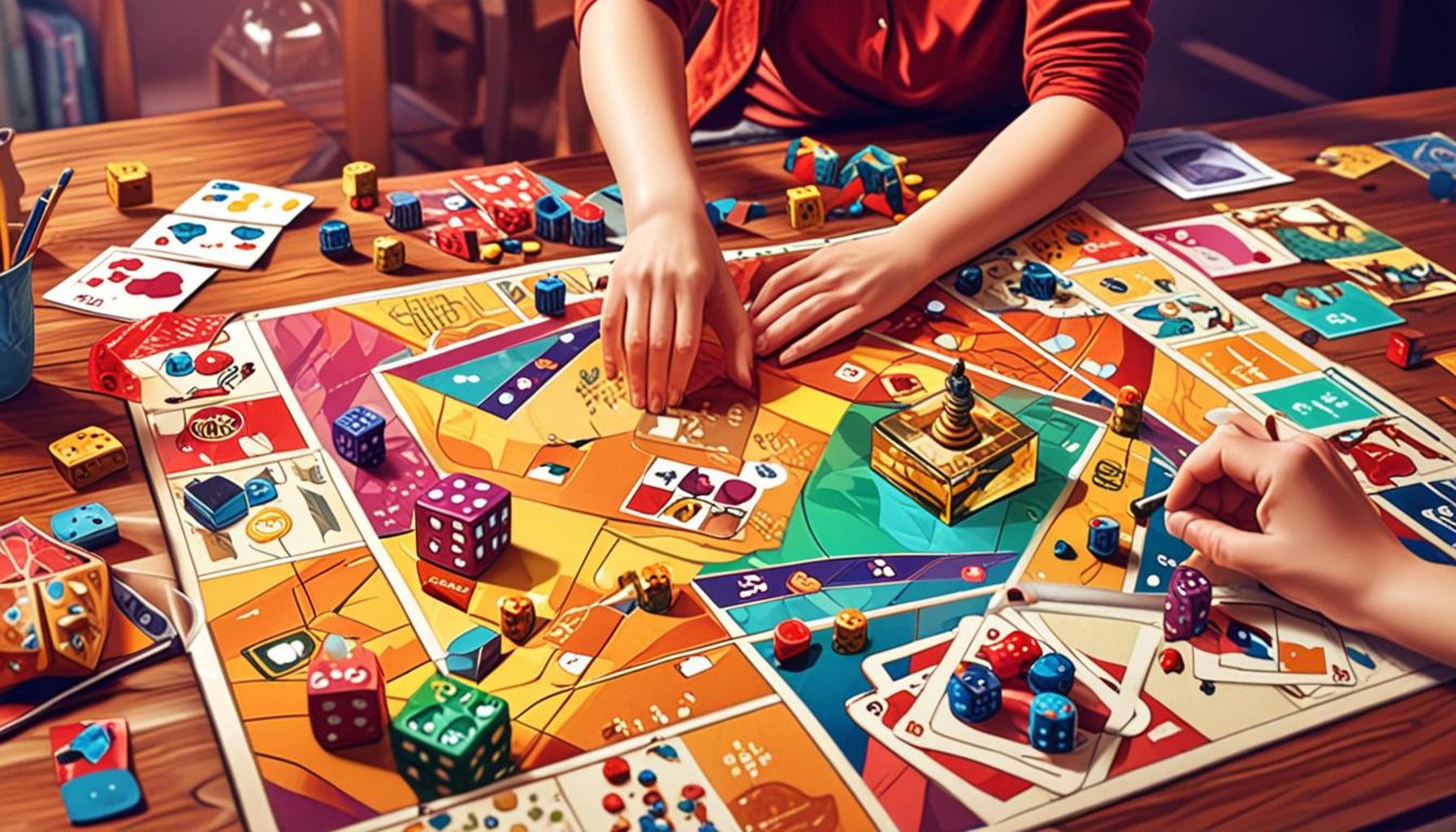
How Visual Puzzles Can Challenge and Develop Critical Thinking

The Cognitive Benefits of Engaging with Visual Puzzles
In an age when information is delivered in rapid-fire succession, it is critical to nurture our critical thinking skills. Engaging with visual puzzles offers a unique and compelling avenue to foster these abilities, providing not just entertainment, but a stimulating challenge for the mind. The process of deciphering these mind-bending puzzles requires heightened focus and encourages innovative thought, making it an effective tool for cognitive development.
Visual puzzles are diverse, ranging from intricate optical illusions to brain-twisting logic problems, each crafted to enhance various cognitive capabilities. For instance:
- Optical illusions: These puzzles create visual paradoxes that play tricks on the brain, compelling the viewer to reconcile conflicting information. A classic example is the famous “Rubin’s Vase,” which can be perceived as either a vase or two faces, showcasing how our perception can be manipulated.
- Logic puzzles: Often found in newspapers and online platforms, these puzzles require users to apply deductive reasoning to identify hidden patterns and draw conclusions. An example is the classic “Einstein’s Riddle,” where solvers must use clues to deduce the ownership of different colored houses by different families.
- Sudoku and crosswords: These games not only demand strategic planning but also enhance one’s ability to recognize patterns. Sudoku, a number-placement puzzle, challenges players to fill a grid so that each row, column, and region contains all digits from 1 to 9, promoting a logical mindset.
- Image puzzles: These puzzles require participants to reassemble jumbled pictures, contributing to enhanced spatial awareness and fine motor skills. Traditional jigsaw puzzles, highly popular in American households, exemplify this method of engaging with visual challenges.
By immersing oneself in visual puzzles, individuals can cultivate a range of valuable skills, such as:
- Problem-solving: These puzzles present complex scenarios that enhance one’s ability to devise effective solutions, an essential skill in both academic and professional settings.
- Creative thinking: Participants are encouraged to approach challenges from innovative angles, reinforcing the idea that there are often multiple paths to a solution.
- Attention to detail: Engaging with visual puzzles trains the mind to notice the subtleties that are often overlooked, which can be particularly beneficial in fields such as engineering, design, and science.
As one delves deeper into the world of visual puzzles, it becomes clear that these engaging intellectual exercises are more than just fun ways to pass the time. They offer a window into our cognitive potential, allowing individuals to tap into hidden abilities and sharpen their critical thinking skills. By continuously challenging ourselves with puzzles, we not only entertain our minds but also lay the groundwork for lifelong learning and intellectual growth.
DISCOVER MORE: Click here to learn about the benefits of memory games
Types of Visual Puzzles That Enhance Critical Thinking
Visual puzzles are not only a source of enjoyment but also serve a vital role in honing an individual’s critical thinking capabilities. By challenging the mental faculties, they push individuals to think beyond the surface, navigate complexity, and develop a robust problem-solving toolkit. To fully appreciate the impact visual puzzles can have, it is essential to explore the different categories and how each uniquely contributes to cognitive growth.
Optical Illusions: Perception Meets Reality
Optical illusions are perhaps the most captivating visual puzzles that demonstrate the intricacies of human perception. These puzzles, which can be seen as engaging artworks, demand the viewer to question their immediate judgment. This type of puzzle not only entertains but also engages the brain in critical processes as one attempts to decipher the conflicting images. For instance, the Penrose Triangle, also known as the impossible triangle, invites solvers to reconsider their understanding of three-dimensional space and reality. As minds wander through these illusions, they develop a greater aptitude for analyzing various perspectives and challenging preconceived notions.
Logic Puzzles: The Art of Deduction
Moving beyond the realm of perception, logic puzzles demand high levels of analytical reasoning. Puzzles such as grid-based brain teasers require players to apply deductive reasoning to piece together information methodically. A popular example is the logic grid puzzle, which typically involves deducing the relationships between a set of objects based on a series of clues. Participation in such activities sharpens one’s ability to construct logical arguments, recognize patterns, and draw conclusions based on available data—foundational skills for effective critical thinking.
Pattern Recognition: The Hidden Structure
Pattern recognition is another crucial cognitive skill that is enhanced by engaging with visual puzzles like Sudoku and other number placement games. Sudoku, a globally beloved puzzle, challenges players to fill a grid so that no numbers are repeated in any row or column. By continuously engaging with such puzzles, individuals strengthen their ability to identify relationships and structures within a set framework. This practice not only boosts confidence in one’s problem-solving abilities but also facilitates improved organizational skills in analyzing complex problems in real life.
Image Jumbles: Rebuilding the Whole
Image puzzles, including jigsaw puzzles, encourage participants to think spatially as they manipulate pieces to create a cohesive image. These activities boost fine motor skills and spatial awareness, which are invaluable in fields like architecture, engineering, and design. Research has shown that individuals who regularly engage in these puzzles often perform better at tasks requiring visual-spatial skills and can easily navigate complex spatial scenarios. The engagement with such visual stimuli establishes a deeper connection between mind and body, enhancing overall critical thinking prowess.
In summary, the diversity of visual puzzles provides ample opportunities for enhancing critical thinking skills through various mechanisms. By immersing oneself in these engaging challenges, individuals not only entertain their minds but also lay a solid foundation for intellectual growth and lifelong learning. Embracing these puzzles means embracing the opportunity to develop analytical and creative thinking, leading to better decision-making capabilities.
| Category | Advantages |
|---|---|
| Cognitive Development | Enhances problem-solving skills by requiring logical reasoning and abstract thinking. |
| Increased Attention to Detail | Promotes observation skills as individuals must discern subtle differences in complex images. |
| Stress Relief | Serves as a form of relaxation and distraction, reducing anxiety through focused engagement. |
| Social Interaction | Encourages collaboration and communication when solving puzzles together. |
Engaging with visual puzzles not only stimulates the mind but also leads to various psychological benefits. Cognitive development is paramount, as these puzzles require a combination of reasoning abilities and analytical skills. Participants are often led to engage in a deeper level of problem-solving, which can translate into everyday scenarios where critical thinking is essential.Additionally, puzzles foster increased attention to detail. Individuals must assess and interpret images closely, discovering nuanced elements that might otherwise go unnoticed. This sharpens their observational skills, vital in many areas of life.Moreover, visual puzzles can significantly contribute to stress relief. They offer an escape by engaging the mind in a challenging yet enjoyable way, allowing users to immerse themselves and momentarily forget their worries. The satisfaction that comes from completing a puzzle can also boost mood and overall mental health.Lastly, these puzzles often provide a unique opportunity for social interaction. When solved collaboratively, they encourage dialogue and teamwork, building stronger relationships while refining critical thinking skills.
EXPLORE MORE: Click here to discover how reasoning games can enhance your problem-solving skills
Visual Puzzles in Everyday Life: Applications and Benefits
Engaging with visual puzzles is not confined to the realm of leisure; their applications can be found in various facets of everyday life. As individuals incorporate these puzzles into their routine, they can glean several surprising benefits. Understanding these applications allows one to see how visual puzzles can transcend mere entertainment and evolve into powerful tools for critical thinking development.
Enhancing Academic Performance
For students, visual puzzles can serve as effective learning aids that enrich the educational experience. Incorporating puzzles like brain teasers and visual riddles into classroom activities has been shown to foster engagement and creativity. Educators encourage students to tackle these challenges as a means of strengthening their analytical skills. Furthermore, studies have found that students who regularly engage with visual puzzles perform better in subjects requiring visual-spatial reasoning, such as mathematics and science. By stimulating critical thinking in a fun and interactive way, visual puzzles can improve grades and enhance overall academic performance.
Cognitive Rehabilitation and Memory Improvement
Visual puzzles are not only beneficial for students but also for adults, particularly in cognitive rehabilitation contexts. Activities like crossword puzzles and mnemonic visual puzzles have shown efficacy in enhancing memory and mental agility. Therapists often incorporate these puzzles into rehabilitation programs for individuals recovering from strokes or age-related cognitive decline. Engaging in visual puzzles challenges the brain, requiring patients to think critically and creatively to solve problems. Furthermore, research indicates that regular puzzle-solving can stave off cognitive decline, making it a valuable activity for older adults aiming to maintain their mental sharpness.
Developing Emotional Intelligence
Interestingly, visual puzzles can also play a role in developing emotional intelligence. By solving visual puzzles, participants often find themselves enduring moments of frustration and triumph, reflecting the emotional rollercoaster of real-life problem-solving. For instance, working through a complex jigsaw puzzle can evoke feelings of stress, focusing one’s thoughts on the task at hand, and ultimately leading to satisfaction upon completion. This process teaches patience, resilience, and self-regulation—key components of emotional intelligence. By understanding one’s emotions throughout the puzzle-solving journey, individuals can develop a strong emotional awareness that supports critical thinking in social situations.
Fostering Teamwork and Collaboration
Visual puzzles are also powerful tools for fostering teamwork and collaboration skills, especially in professional settings. Activities such as escape room challenges, which often require participants to solve a series of visual puzzles under time constraints, promote collaboration as teams must communicate effectively to succeed. These challenges not only strengthen team dynamics but also force individuals to think critically together, exploring diverse perspectives and solutions. As team members navigate these complex scenarios, they learn valuable skills such as negotiation, problem-solving, and the ability to consider alternative viewpoints—essentials for any effective collaboration.
With their wide-ranging applications and benefits, visual puzzles prove to be much more than casual diversions; they are instrumental in developing critical thinking skills across various aspects of life. Engaging with these puzzles regularly can enrich one’s cognitive abilities, emotional intelligence, and collaborative skills, encapsulating the myriad of advantages that come from embracing visual challenges.
DIVE DEEPER INTO: Click here for insights on problem-solving in mind games
Conclusion: The Transformative Power of Visual Puzzles
As we delve into the multifaceted world of visual puzzles, it becomes evident that they are far more than mere pastimes; they are vital tools that can significantly enhance critical thinking skills. The evidence suggests that engaging with visual puzzles not only fosters academic performance among students but also aids adults in cognitive rehabilitation and memory improvement. Moreover, the emotional journey experienced while solving these puzzles teaches individuals valuable lessons in emotional intelligence, as they learn to navigate frustration and joy through persistence.
Furthermore, in today’s collaborative work environment, visual puzzles offer a unique way to strengthen teamwork and communication skills, propelling individuals to engage in critical dialogue while fostering diverse perspectives. This process not only sharpens problem-solving abilities but also cultivates an atmosphere of creativity and cooperation. It is clear that visual puzzles enrich our cognitive and emotional lives extensively.
With their adaptability to various contexts—be it educational settings, therapeutic practices, or professional development—visual puzzles invite us all to embrace the challenges they present. By integrating these engaging activities into our daily routines, we can nurture a mindset that values continuous learning and critical thinking. In an era that demands innovation and adaptability, the time is ripe to recognize and harness the transformative power of visual puzzles as the catalysts for thriving in a complex world.