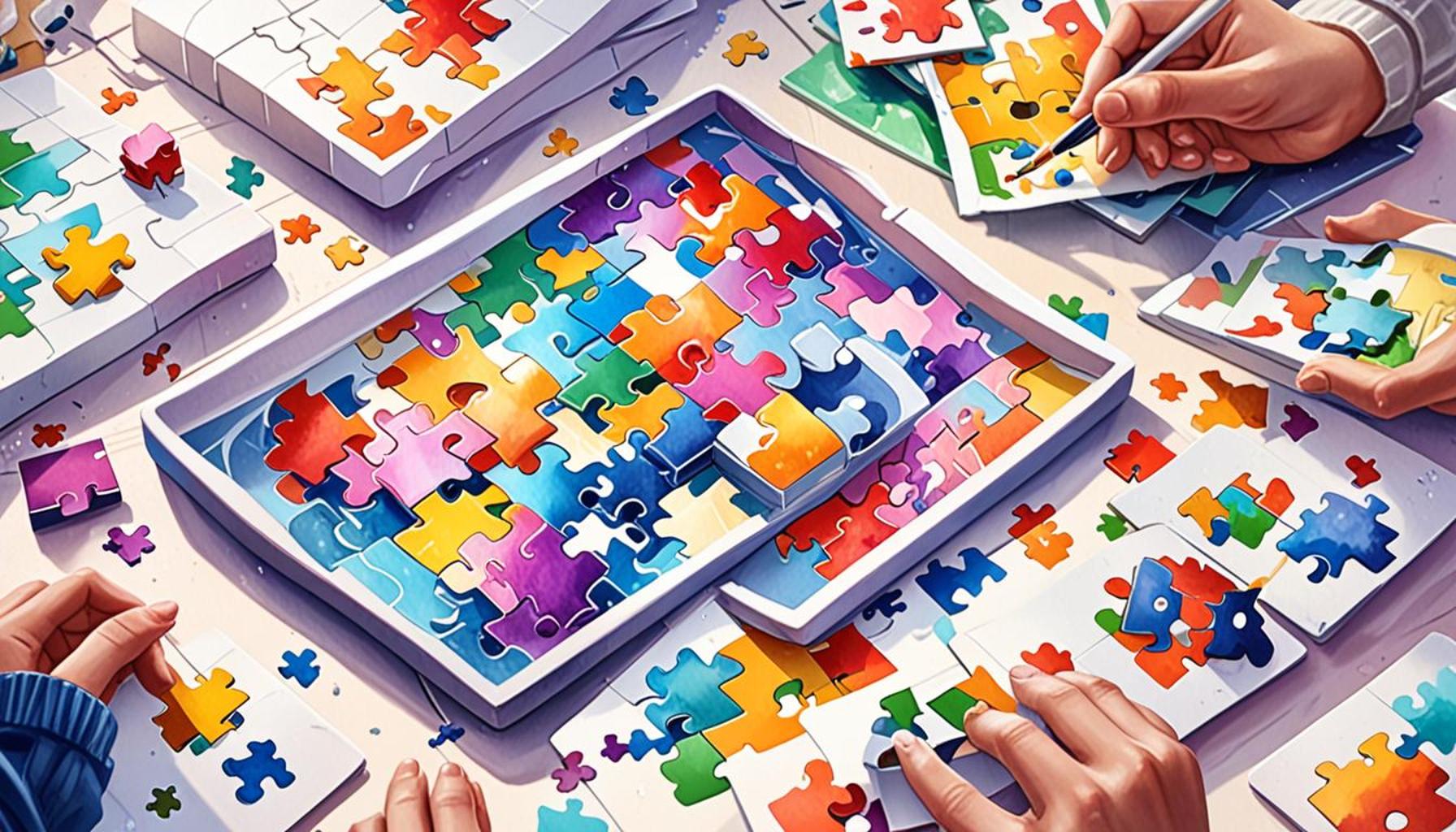
Investigating the Effects of Digital Puzzles on Attention and Focus in a Distracted World

The Digital Age and Our Attention Struggles
In today’s fast-paced world, where a plethora of notifications compete for our dwindling attention spans, maintaining focus has become increasingly arduous. With the constant allure of social media, videos, and various online distractions, it is no wonder that many individuals find themselves struggling to concentrate. As we assess the effects of this distraction-laden environment, one intriguing solution arises: engaging with digital puzzles. These interactive activities may offer a unique respite from the chaos, serving not only as entertainment but also as a means of enhancing our cognitive functions.
The Cognitive Advantages of Digital Puzzles
Digital puzzles encompass a wide array of formats, each showcasing significant cognitive benefits. From traditional games like Sudoku to innovative mobile apps that present intricate jigsaw challenges, these games can be both enjoyable and mentally stimulating.
Varied Complexity: One prominent feature of digital puzzles is their ability to adapt to diverse skill levels. Players can select from beginner to advanced settings, ensuring that each session is tailored to their needs. This adaptability means that individuals can progressively challenge themselves, which not only enhances their problem-solving skills but also builds confidence.
Immediate Feedback: Many digital puzzle platforms enhance the user experience by offering real-time hints and corrections. For instance, platforms like Lumosity provide users with instant feedback on their performance, which aids in learning and adjustment while enhancing their ability to tackle more complex problems in the future.
Community Engagement: The availability of online leaderboards fosters a sense of competition and camaraderie among players. Participating in challenges against friends or other users worldwide not only adds a social dimension but also motivates individuals to improve their skills through engagement with others.

Puzzles as a Mental Reset
Research indicates that the act of solving puzzles can act as a natural mental reset. Engaging in these activities has been shown to improve working memory and augment cognitive flexibility, two essential components of effective problem-solving and concentration. Furthermore, studies have illustrated that short breaks involving puzzles can significantly renew a person’s ability to concentrate on other tasks.
The relationship between distractions and productivity is striking; studies reveal that multitasking can lead to a staggering 40% decline in productivity. Given this statistic, integrating puzzles into one’s routine may offer a beneficial countermeasure. By providing a structured, distraction-free environment, digital puzzles allow users to relieve mental fatigue and return to other tasks with renewed focus.
As we continue our examination of this captivating intersection of digital puzzles and cognitive enhancement, it becomes increasingly clear that these interactive experiences offer a unique pathway to navigate our modern, distracted lives. The next sections will delve deeper into the science behind puzzle-solving and underscore its potential as a practical tool for improving concentration and mental clarity in an age of ceaseless distractions.
DIVE DEEPER: Click here to learn more
Unlocking Cognitive Potential Through Digital Puzzles
The potential cognitive benefits of engaging with digital puzzles extend beyond mere enjoyment. Several studies suggest that these interactive games can significantly improve attention and focus, particularly in today’s distraction-heavy landscape. As our society becomes increasingly reliant on digital devices, understanding the mechanisms behind puzzle-solving can reveal vital insights into enhancing our cognitive resilience.
The Science of Attention and Focus
At the core of attention and focus lie several cognitive processes that can be refined through consistent engagement with tasks that require concentration. Digital puzzles provide an ideal framework for harnessing these processes, as they stimulate the brain through problem-solving and visual-spatial reasoning.
Working Memory: This critical cognitive function refers to the ability to hold and manipulate information over short periods. Solving puzzles often demands the use of working memory to remember pieces or strategies while working toward a solution. Research has shown that individuals who regularly engage in mentally stimulating activities, such as solving puzzles, demonstrate improved working memory performance over time.
Cognitive Flexibility: Another essential skill influenced by puzzle-solving is cognitive flexibility, which pertains to the ability to switch between tasks and adapt to changing conditions. Digital puzzles often present varying challenges, forcing players to adjust their thinking and strategy dynamically. Studies indicate that those who practice cognitive flexibility show enhanced focus during complex tasks.
A Break from Digital Distractions
Interestingly, digital puzzles can serve as a powerful antidote to the very distractions that fill our screens. Unlike passive consumption—such as scrolling through social media—engaging with puzzles necessitates active participation and mental engagement. As a result, players can recalibrate their attention, stepping away from the overwhelming influx of information that often saps energy and focus.
- Enhanced Concentration: Digital puzzle engagement allows for prolonged periods of focused work since players must fully immerse themselves in problem-solving tasks.
- Structured Cognitive Breaks: Implementing short, structured breaks within work or study routines consisting of puzzle-solving can serve as mental recovery periods, ultimately boosting productivity.
- Improved Mood: Engaging in challenging puzzles can release dopamine—a neurotransmitter associated with pleasure and reward—providing players with a sense of accomplishment and motivation to face subsequent tasks.
As we delve deeper into the fascinating relationship between digital puzzles and cognitive functions, it becomes evident that these games are more than just a form of entertainment. Rather, they represent a powerful tool that individuals can harness to cultivate better attention and focus in an increasingly distracted world. The subsequent sections will explore empirical studies that reveal the fascinating ways digital puzzles influence our cognitive capabilities, guiding us toward a clearer understanding of their role in fostering enhanced mental performance.
In today’s fast-paced, distraction-laden environment, attention has become a precious commodity. Exploring the effects of digital puzzles on attention and focus reveals intriguing insights into how these engaging activities can bolster cognitive function and enhance concentration. Digital puzzles, whether they are jigsaw puzzles, crosswords, or problem-solving games, demand a level of mental engagement that can counteract the distractions of modern life. Research shows that the immersive nature of puzzles requires users to focus on specific tasks, increasing their ability to concentrate over time. This aspect is particularly vital in a world filled with relentless notifications and the allure of multitasking.Moreover, solving puzzles can serve as a practical exercise to improve working memory and overall cognitive flexibility. Puzzle-solving not only challenges the mind but also facilitates increased mental agility, which is essential for maintaining focus amidst distractions. By regularly engaging in these activities, individuals can cultivate a stronger attention span and improve their ability to ignore irrelevant stimuli in their surroundings.Recent studies suggest that even short bursts of puzzle play can provide lasting benefits. For example, participants who regularly engaged in digital puzzles demonstrated improved performance on tasks requiring sustained attention compared to those who did not participate. These findings emphasize the potential of puzzles as a tool for enhancing focus and combatting the negative effects of distraction, thereby providing individuals with a means to train their minds in this technology-saturated age. As we delve deeper into the exploration of digital puzzles, when considering their integration into daily routines, it becomes clear that these engaging activities might not only offer enjoyment but also contribute significantly to an individual’s cognitive resilience. Embracing such activities may open doors to a more focused future, despite the cacophony of distractions that abound in our daily lives.
DISCOVER MORE: Click here to enhance your child’s cognitive growth
The Role of Digital Puzzles in Cognitive Development
As various forms of digital media vie for our attention, the practice of puzzle-solving emerges as an unexpectedly powerful mechanism for strengthening cognitive capabilities. The immersive quality of digital puzzles not only stimulates the brain’s engagement but also fosters essential skills that can extend to everyday tasks and challenges.
Problem-Solving Skills and Critical Thinking
Digital puzzles inherently present challenges that require players to think critically and devise strategies. This engaging challenge encourages users to analyze situations, assess potential solutions, and implement effective strategies. Research indicates that consistent engagement with challenging puzzles can enhance overall problem-solving skills, translating to improved decision-making in real-life scenarios.
Real-World Applications: The cognitive skills developed through digital puzzle engagement often parallel those needed in professional environments. For instance, individuals in fields such as engineering, medicine, and business frequently rely on analytical thinking and problem-solving skills that are directly honed through regular interactions with puzzles. By sharpening these skills in a playful digital landscape, players are better prepared to tackle complex tasks in their careers.
Attention Restoration and Manageable Distractions
In an era characterized by information overload, digital puzzles offer a refreshing escape that encourages attention restoration. Unlike constant notifications and alerts from mobile devices, puzzles require focused engagement, allowing users to momentarily disconnect from the chaos of digital distractions. This restorative effect can foster a state of flow—where individuals are entirely immersed in an activity, leading to deeper concentration and satisfaction.
- Mental Clarity: As players become engrossed in puzzle-solving, they often report heightened clarity of thought and improved emotional regulation, which are crucial for performing well in demanding situations.
- Building Routine and Structure: Incorporating regular puzzle-solving sessions into daily routines can provide structure, granting individuals a designated time to focus their attention away from external distractions.
- Mindfulness Techniques: Engaging in digital puzzles can also promote mindfulness, as players become fully absorbed in the here-and-now, reducing the tendency to ruminate on past events or worry about the future.
Furthermore, emerging research shows that digital puzzles may serve as a bridge for individuals facing challenges such as attention deficit disorders. Therapeutic applications of puzzle-solving have begun to gain traction, with programs integrating puzzles in cognitive-behavioral therapies to help develop coping strategies and enhance attention spans among affected individuals.
The Future of Puzzle Apps and Cognitive Training
Many digital puzzle applications are now embracing gamification and personalized content to target specific cognitive skills, making them even more appealing. With advanced data analytics, these platforms can tailor challenges to accommodate individual skill levels, ensuring players remain engaged while also progressing in their cognitive development.
Statistics and Findings: Recent surveys indicate that over 60% of regular puzzle players report improved focus and cognitive performance after integrating puzzles into their routines. This remarkable statistic highlights the potential of digital puzzles as not only a form of entertainment but also a tangible method of cognitive enhancement.
As we explore the intersection of technology and cognitive development further, the implications of digital puzzles on attention and focus reveal tantalizing possibilities for harnessing these games in practical, transformative ways in our daily lives. The multifaceted advantages of puzzle engagement serve as an invitation for individuals to embrace this compelling avenue for development in an increasingly distracted world.
EXPLORE MORE: Click here to enhance your memory and focus
Conclusion: The Transformative Potential of Digital Puzzles
As we conclude our exploration of digital puzzles and their impact on attention and focus in an increasingly distracted world, it becomes evident that these engaging activities hold significant promise for cognitive enhancement. The ability of digital puzzles to streamline attention, restore mental clarity, and cultivate essential problem-solving skills presents an innovative approach to overcoming pervasive distractions.
Empowering Mechanism: Digital puzzles not only entertain but empower individuals to develop vital cognitive skills that are applicable in various life scenarios. By integrating these gamified challenges into daily routines, users experience a structured engagement that encourages sustained focus, ultimately enhancing their productivity and decision-making capabilities both personally and professionally.
- Enhancement of Mental Agility: Regular puzzle-solving has been shown to sharpen not just attention, but also adaptability and critical thinking—qualities that are increasingly essential in fast-paced work environments.
- Mindfulness and Emotional Regulation: These puzzles serve as a form of mindfulness practice, helping players to be present, reduce anxiety, and improve emotional well-being amidst the noise of daily distractions.
- Therapeutic Applications: The utility of digital puzzles extends beyond entertainment; they may also offer therapeutic benefits for individuals experiencing attention-related challenges, paving the way for innovative cognitive therapies.
As findings demonstrate over 60% of players reporting enhanced focus due to their engagement with digital puzzles, it is crucial to harness this potential actively. Moving forward, as technology and puzzle designs evolve, they promise not only to captivate users but also to foster a generation better equipped to navigate the complexities of modern life.
In a distracted age, digital puzzles emerge as more than just trivial pastimes; they stand as a beacon of hope for cognitive restoration and enhancement. Embracing the intricate interplay of focus, fun, and learning through these digital landscapes can lead to profound, long-lasting benefits in our daily lives.